A sharp, electric jolt from your lower back all the way down to your foot. A constant ache in the buttock that makes sitting uncomfortable. Tingling in the leg that comes and goes without warning. If this sounds familiar, you may be dealing with sciatica, a nerve-related condition that is very common in Malaysia, particularly among those with desk-based jobs.
WHAT IS SCIATICA?
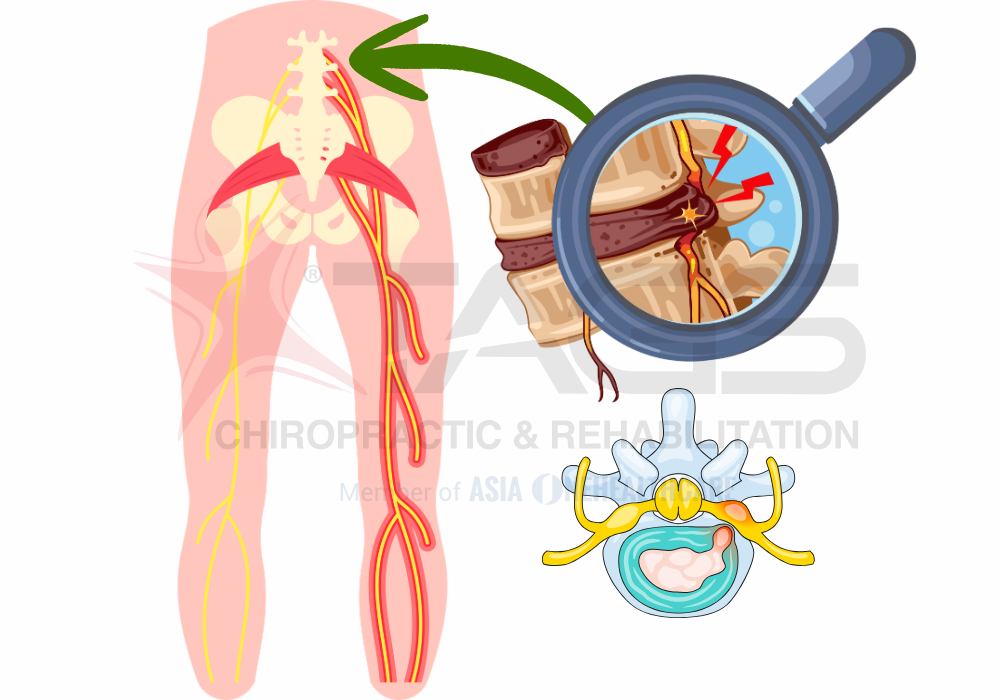
Sciatica is not a diagnosis in itself, it is a symptom. It refers to pain that travels along the path of the sciatic nerve, which runs from the lower back through the hips, buttocks, and down each leg.
It usually occurs when something compresses or irritates the sciatic nerve. Common causes include a herniated disc, a bone spur, or tightness in the piriformis muscle deep in the buttock. In most cases, only one side of the body is affected.
Common causes include:
- Herniated or slipped disc pressing on the nerve root
- Piriformis syndrome — a tight or inflamed muscle in the buttock
- Spinal stenosis — narrowing of the spinal canal
- Prolonged sitting or poor posture placing ongoing stress on the lower spine
COMMON SYMPTOMS
- Shooting or burning pain from the lower back down to the leg or foot
- Pain that is worse when sitting, sneezing, or coughing
- Numbness or a pins-and-needles sensation in the leg or foot
- Weakness in the affected leg
- Discomfort mainly on one side of the body
If you are experiencing any of the above, it is worth having a proper assessment. A chiropractor or physiotherapist can identify what is driving your symptoms and rule out anything that may need further investigation.
HOW IS IT TREATED?
The root cause of sciatica matters, treatment works best when it targets what is actually compressing the nerve, rather than just masking the pain.
A thorough assessment will help identify whether the issue stems from the spine, the surrounding muscles, or both. From there, a combination of chiropractic adjustments to reduce nerve compression and restore spinal alignment, targeted stretching and strengthening exercises for the lower back, hips, and core, and therapeutic modalities such as IFC, ultrasound, and TENS can be used together to address inflammation and pain.
Dry needling is also commonly used to release the piriformis and other tight muscles contributing to nerve irritation.
Lifestyle changes play a big role in recovery and prevention. For Malaysians who spend long hours seated at a desk or behind the wheel, simple adjustments, like taking regular movement breaks, correcting chair height, and avoiding crossing the legs, can make a meaningful difference over time.
WHEN SHOULD YOU GET CHECKED?
Sciatica that is left untreated can become chronic and harder to resolve. If the pain has been present for more than a week, or is affecting your ability to walk, sleep, or work, a proper assessment is the right first step.
You can reach us at:
- Phone: +60 12-217 3788
- Email: info@tonikasia.com