Uneven shoulders. A waist that does not look quite symmetrical. A child who tends to lean to one side when standing. These subtle signs are often the first clue that someone has scoliosis, a condition involving an abnormal sideways curvature of the spine. It is more common than many people in Malaysia realise, and it affects both children and adults.
WHAT IS SCOLIOSIS?
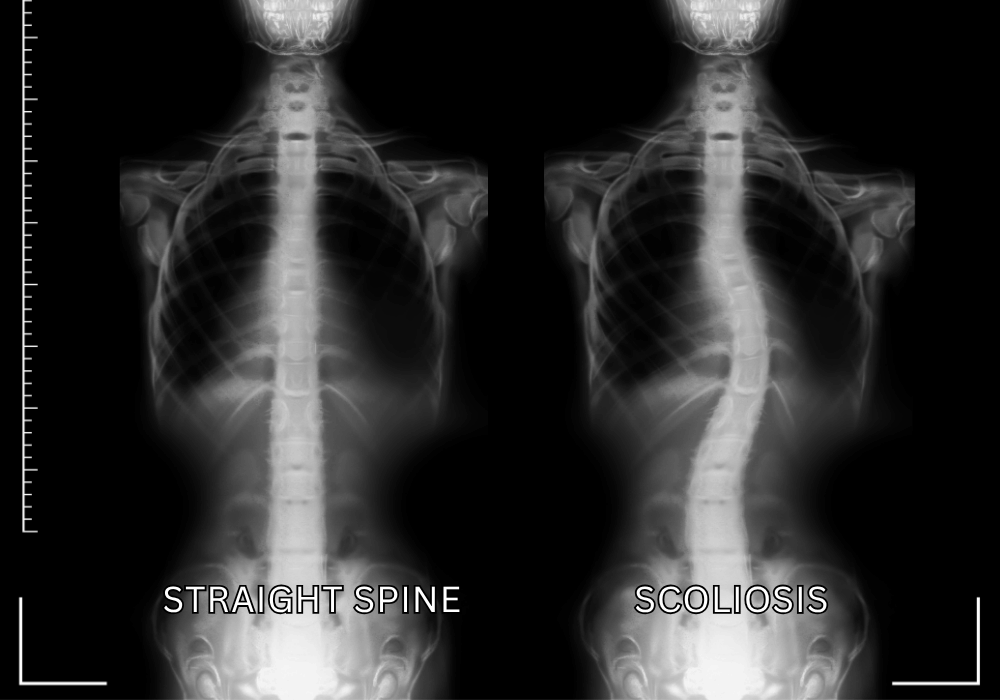
A healthy spine runs straight down the centre of the back when viewed from behind. In scoliosis, the spine curves sideways — forming a C or S shape. This curvature can range from mild to severe, and it may also cause the spine to rotate, making the ribcage or hips appear asymmetrical.
Scoliosis is generally categorised as:
- Idiopathic: the most common type, with no clearly identified cause. It typically develops in adolescents during growth spurts.
- Degenerative: develops in adults due to age-related changes in the spine’s joints and discs.
- Congenital: present from birth due to abnormal vertebral development.
- Neuromuscular: associated with conditions like cerebral palsy or muscular dystrophy.
COMMON SIGNS TO LOOK OUT FOR
- One shoulder sitting higher than the other
- A shoulder blade that sticks out more prominently on one side
- Uneven hips or waist
- The spine visibly curves when bending forward
- Back fatigue or aching after standing or sitting for extended periods
- In more severe cases, breathing may be affected
If you are experiencing any of the above, it is worth having a proper assessment. A chiropractor or physiotherapist can identify what is driving your symptoms and rule out anything that may need further investigation.
SCOLIOSIS IN CHILDREN VS ADULTS
Children & Adolescents | Adults | |
Common Type | Adolescent idiopathic scoliosis | Degenerative or continued adolescent curve |
Main Concern | Curve progression during growth | Pain, stiffness, and deterioration |
Treatment Focus | Correction and monitoring | Symptom management and stability |
Response to Care | Generally faster | Requires more time and consistency |
WHO IS MOST AT RISK?
The exact cause of scoliosis is still unknown in most cases, that is what “idiopathic” means. However, research does tell us quite a bit about who is more likely to develop it.
Scoliosis most commonly appears between the ages of 10 and 15, coinciding with adolescent growth spurts. While boys and girls are diagnosed at similar rates, adolescent idiopathic scoliosis is around 10 times more common in girls than boys and when girls do develop it, their curves are significantly more likely to progress and require treatment.
A few key facts worth knowing:
Scoliosis most often develops between ages 10 and 18, when rapid growth spurts can cause curves to progress
Adolescent idiopathic scoliosis is found in as many as 4 in 100 adolescents
It can run in families, though having a family history does not guarantee the condition will develop
Most cases in children are idiopathic, meaning the exact cause is unknown, and it is not caused by anything in the child’s or family’s lifestyle
The takeaway? If you have a daughter between the ages of 10 and 15, it is worth being aware of the early signs, even if she has no pain at all.
HOW IS IT MANAGED?
Scoliosis management depends on several factors: the type, the degree of curvature, the patient’s age, and whether the curve is progressing. Not every case requires aggressive treatment, but all cases benefit from proper monitoring and appropriate intervention.
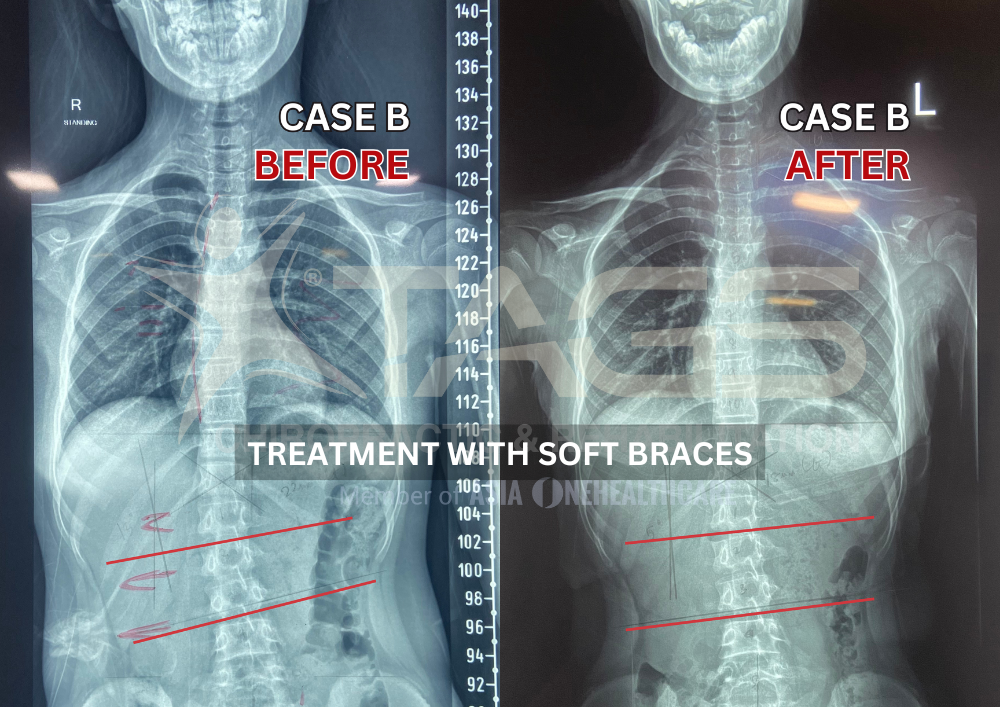
SpineCor Soft Bracing For individuals with a scoliosis curve below 50 degrees, SpineCor soft bracing is an effective, non-invasive treatment option available at TAGS. Unlike rigid braces, SpineCor uses a dynamic soft brace system that allows freedom of movement while gently correcting the curve. It is particularly suitable for adolescents who are still growing, as well as adults looking for a comfortable, wearable solution to manage curve progression.
Physiotherapy & Schroth-Based Rehabilitation For those who prefer not to wear a brace, or as a complement to bracing, physiotherapy is a highly effective approach. Schroth Method-based rehabilitation is a specialised exercise programme specifically designed for scoliosis. It uses three-dimensional corrective movements tailored to the unique shape of each individual’s curve. The goal is to improve muscle balance, reduce discomfort, and slow or halt curve progression over time.
Postural training and patient education are equally important. Understanding how to carry yourself in daily life, at school, or at work makes a real difference in long-term outcomes.
For adolescents, early assessment is particularly valuable as the growing spine responds better to conservative care. For adults, the focus shifts toward managing pain, maintaining function, and preventing further deterioration.
Scoliosis is a manageable condition, not always a curable one, but with the right approach, most people can live comfortably and actively.
WHEN SHOULD YOU GET CHECKED?
If you or your child shows any of the signs above, or if you have been told by a doctor that there is a spinal curve worth monitoring, a detailed assessment by a chiropractor or physiotherapist can help you understand the current state of the spine and what steps are appropriate.
Visit your nearest TAGS Chiropractic & Rehabilitation centre today.
 Chat with us on WhatsApp: Click here to start a conversation.
Fast response. No obligation.