

That familiar, unwelcome stiffness. The slow, creaky roll out of bed. If this is your standard morning routine, you’re not alone. While you’re dreaming of tropical vacations, your spine might be staging a nightly protest. The culprit often isn’t your day, it’s your night.
Let’s explore why your morning back pain keeps happening and how the secret to a pain-free day lies in mastering how to sleep with back pain.
Why Morning Back Pain Happens: The Nightly Grind
You might think that since you’re lying still, your body is in a state of restful repair. In reality, your spine is on a delicate mission to maintain its natural ‘S’-shaped curve. When your sleep position for back pain is poor, it forces your spine into awkward angles for hours. This creates misalignment, strains supporting muscles and ligaments, and reduces blood flow.
By morning, this manifests as the stiffness and ache we know too well. It’s essentially low-grade structural stress, all night long.
The Hidden Effects of Poor Sleep Posture
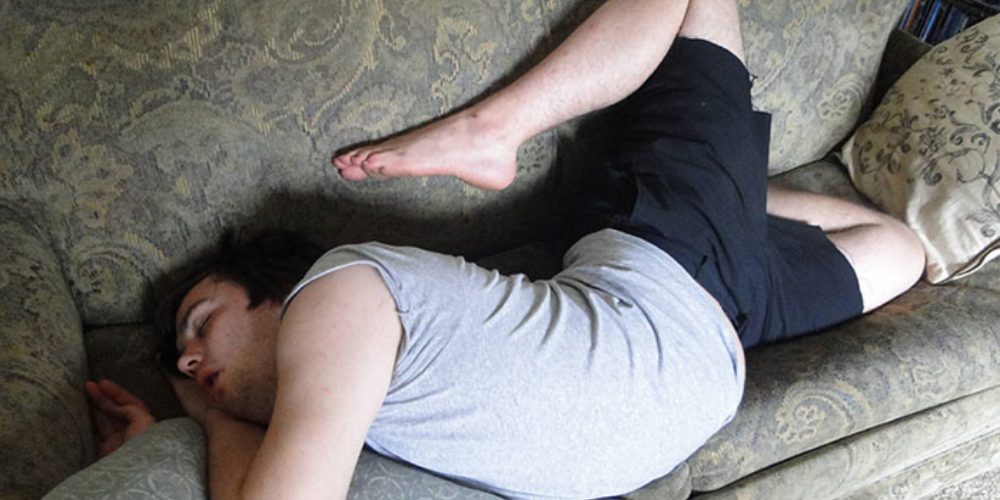
Ignoring your sleep posture is like driving a car with misaligned wheels, eventually, things start to wear down. The effects go beyond that initial stiffness:
- Misalignment: Poor posture can gently push your vertebrae out of their optimal position, irritating nerves and causing pain that radiates beyond your back.
- Muscle Strain: Your muscles aren’t resting; they’re working overtime to stabilize a poorly positioned spine. Think of it as a constant, low-level plank you didn’t sign up for.
- Chronic Stiffness: Waking up with a stiff back every day can set a negative tone for your entire day, limiting your mobility and mood.
Sleep Positions That Trigger Pain (The Usual Suspects)
Let’s play detective and identify the prime suspects in the case of your waking up with back pain.
- The Stomach Sleeper:

This is public enemy number one for spinal health. Sleeping on your stomach flattens the natural curve of your lower back and forces your neck into a severe, hours-long twist. It’s a double whammy of misalignment.
- The Tight Fetal Curl:

While curling up can feel cozy, pulling your knees tightly to your chest rounds your back dramatically. This can overstretch the muscles and lead to significant stiffness upon uncurling.
- The Unsupported Side Sleeper:

Side sleeping can be a great position, but only if done correctly. Letting your top knee drop down toward the mattress creates a twisting torque through your pelvis and lower back. Without proper pillow support, your spine is not in a neutral line.
The Best Sleep Position for Back Pain: Chiropractor-Approved

Ready for the good news? You don’t have to give up sleeping; you just have to get smarter about it. Here are our top chiropractor-approved positions.
- For Back Pain Sleepers:

This is often the best sleep position for back pain. Lie on your back with a pillow under your knees. This simple hack helps maintain the natural curve of your lower back and reduces pressure on your spine.
- For Side Sleepers:
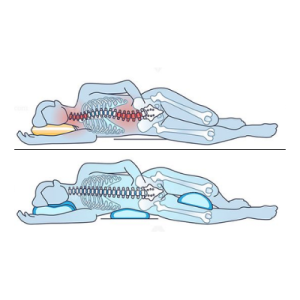
This is an excellent alternative. Lie on your side with your knees slightly bent. Place a firm pillow between your knees to keep your hips, pelvis, and spine in a neutral, aligned position. Say goodbye to that twisting torque!
Practical Fixes: Pillows, Mattresses & Morning Moves
Knowing how to sleep with back pain is half the battle. The other half is your setup and routine.
- Pillow Talk: Your pillow should keep your head in line with your spine. Back sleepers need a thinner pillow; side sleepers need a thicker, firmer one to fill the gap between ear and shoulder.
- Mattress Matters: You don’t necessarily need a “rock-hard” mattress. Look for one that is medium-firm to provide a balance of support and comfort, preventing your hips from sinking too deeply.
- Morning Moves: Before you leap out of bed, try a gentle stretch. Gently pull one knee at a time to your chest, or do a slow cat-cow stretch on all fours to warm up your spine and soothe morning back pain.
Still Waking Up in Pain? It May Be Time for Professional Help
If you’ve adjusted your posture and are still facing daily discomfort, the issue may be deeper than your pillow setup. Persistent morning back pain can signal an underlying issue like a joint dysfunction, a disc concern, or chronic muscle imbalance.
This is where it’s time to stop guessing and start healing. If you’re searching for a chiropractor or physiotherapist for back pain in Malaysia who can provide a lasting solution, you’ve found your team.
👉 Book an appointment today and take your first step toward a pain-free tomorrow.
📲 Chat with us on WhatsApp: Click here to start a conversation.
Fast response. No obligation.